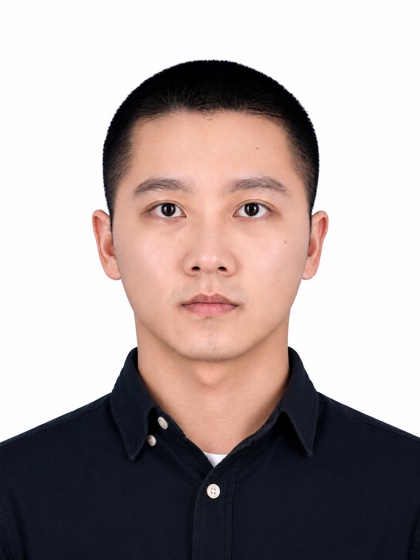
Xiuyin Li 李袖印

Master of Data Science student, The University of Hong Kong

Email · CV · GitHub · LinkedIn

Portrait of Xiuyin Li

I am currently pursuing a Master of Data Science at the University of Hong Kong and expect to complete the program in December 2026. I hold a B.S. in Statistics, with a minor in Computer Science and Technology, from Shandong University.

My research interests center on reliable self-improvement in LLM agents: how agents can improve through interaction, and how to determine whether observed gains are genuine, robust, and transferable rather than artifacts of noisy feedback, evaluation design, or differences in test-time compute. Motivated by technical AI safety, I am especially interested in empirically measurable questions involving robustness, calibration, verifiability, and generalization.

I am currently seeking research assistant opportunities aligned with these questions and intend to pursue a PhD.

Research Interests

A central question motivating my interests is how to evaluate and improve LLM agents that learn from interaction—through model updates or system-level changes to memory, tools, and control policies—across tasks and environments under realistic compute and evaluation budgets.

I would welcome the opportunity to refine these questions, explore related directions based on a group’s research priorities, and identify where my background could contribute most effectively.

Research Experience

EM and MCEM for Parameter Estimation in Regression Models

A methodological study and R implementation of EM/MCEM estimators for Student's t regression and linear mixed models, combining derivations, simulation-based validation, and two real-data applications.

  • Derived the latent-variable posteriors for Student's t regression and linear mixed models, then implemented the resulting EM/MCEM algorithms in R. Used marginal GLS (ECME) updates for fixed effects, recomputed posterior quantities between variance-component updates, and kept MAP objectives for t regression and ML/REML objectives for mixed models explicit.
  • Added REML updates to reduce variance-component bias when the number of groups is small. Reproducible simulations with 200 and 500 replications assessed the correction; in matched single-dataset checks, deterministic EM agreed with optim, lme4, and nlme to within 10−8–10−6.
  • Applied the methods to facial-age modeling with 8,000 UTKFace embeddings and annotator response-time modeling with 59,699 CIFAR-10H trials from 299 annotators. Reworked the computations to avoid large dense matrices; the t model achieved a better in-sample fit than a Gaussian baseline, while the mixed-model implementation closely matched lme4.

Synthetic Control Methods for Causal Inference

An exploratory research collaboration with Yunhao Wang and three other undergraduate students, focused on potential applications and extensions of synthetic control methods through targeted reading and empirical reproduction.

  • Reviewed foundational synthetic-control papers to understand the classical framework: constructing a weighted combination of untreated donor units to match a treated unit before intervention and estimating the treatment effect from the post-intervention outcome gap.
  • Reproduced empirical analyses from multiple synthetic-control studies in R, reconstructing each study's data preparation, donor pool, predictor specification, estimation procedure, and treatment-effect analysis.

Selected Projects

Meeting Agent — Multimodal RAG with Long-Term Memory

A full-stack multimodal meeting assistant with an interactive interface for ingesting recordings, documents, and images and reviewing answers with clickable, source-aligned citations. It combines hierarchical hybrid retrieval, persistent memory, and integrated evaluation of retrieval quality and answer faithfulness.

  • Designed and implemented a hierarchical meeting-to-file-to-chunk retrieval pipeline, combining Chroma vector search with SQLite FTS5 lexical retrieval using BM25 scoring, fusing candidates through Reciprocal Rank Fusion, and applying optional semantic reranking; added adaptive per-file allocation and session-level conversational anchors.
  • Built a layered memory architecture with LLM-based fact extraction, semantic retrieval, configurable TTL and importance-based decay, knowledge-graph entity–relation tracking with alias resolution, and searchable episodic summaries for cross-session recall.
  • Implemented content-aware document parsing that profiles uploads, routes among Marker, MinerU, and PaddleOCR, quality-gates provider output, and falls back to local PyMuPDF extraction for PDFs.
  • Validated the backend with approximately 1,615 tests across at least 175 files, spanning retrieval, memory, ingestion, streaming, and failure recovery; also added frontend and end-to-end coverage.

Web-Agent — VLM-Driven Browser Agent

A VLM-driven research agent supporting local inference via vLLM and API-hosted models, with Playwright-based browser control. It combines screenshot-and-DOM grounding for web navigation with document parsing, figure extraction, and OCR to produce evidence-grounded findings.

  • Led the original implementation of dual-mode VLM inference through vLLM or APIs, Playwright-based browser control, and PDF figure extraction; also built a lightweight alternative to browser-use as a fallback.
  • Independently rewrote the system as a typed Python package with swappable planner and tool interfaces and added a quality-gated OCR cascade to resolve caption-referenced PDF figures.
  • Hardened long-horizon execution with layered timeouts for planner requests, tools, and end-to-end tasks, plus consecutive-failure aborts and four-signal loop detection; the current package includes at least 50 built-in tools and 186 automated tests.

Zero-Shot CNNs from Textual Descriptions — Reproduction & Extension

A from-scratch PyTorch reproduction of Ba et al. (ICCV 2015) across CUB-200-2011 and Oxford Flowers-102, extended with alternative objectives, SBERT/CLIP text encoders, and DenseNet/ResNet backbones, with automated quantitative and visual analysis.

  • Led and implemented the full paper reproduction, building the fully connected, convolutional, and joint weight-prediction variants from scratch in PyTorch. Developed reproducible experiment scripts covering dataset setup, model training, checkpoint evaluation, four paper-aligned result tables, and word-sensitivity and convolutional-filter visualizations across both datasets.
  • Standardized and integrated teammate-contributed implementations of three auxiliary losses, four SBERT/CLIP text encoders, and six DenseNet-121/ResNet-50 backbone configurations, then trained and evaluated all 13 controlled extensions; under a fixed joint-model/VGG-19/BCE setup, the multi-granularity CLIP variant increased CUB unseen-class ROC-AUC from 0.680 to 0.886.

NLLB-200 Chinese→English Translation — LoRA Fine-Tuning

A resource-efficient Chinese-to-English translation pipeline that adapts NLLB-200-distilled-1.3B with rank-32 LoRA and carefully separated training, validation, and final-evaluation workflows on WMT19.

  • Implemented rank-32 LoRA across attention and feed-forward projections with explicit NLLB source and target language control; built preprocessing for 600,000 candidate WMT19 pairs, applying normalization throughout while restricting quality filtering and exact-pair deduplication to the training split.
  • Selected the best checkpoint by BLEU on a separate 2,000-pair validation slice, then achieved 24.9 sacreBLEU with five-beam decoding on the unchanged 3,981-pair WMT19 validation split reserved for final evaluation.

ViT Image-to-LaTeX — Math Expression Recognition

A from-scratch pure-Transformer image-to-LaTeX system that pairs a ViT encoder with an autoregressive decoder and compares printed and handwritten formula recognition under a matched training protocol.

  • Implemented a 7.7M-parameter ViT encoder–Transformer decoder without a CNN backbone or grammar constraints, and trained separate models from scratch on 50,000 printed and 50,000 handwritten formulas using the same architecture and optimization recipe.
  • Evaluated teacher-forced accuracy on both full 2,000-example test splits and autoregressive BLEU-4 on 500 examples per domain; four-beam decoding reached 0.701 BLEU-4 on printed formulas, while the MathWriting results exposed substantial cross-writer generalization and teacher-forcing gaps.
  • Diagnosed training collapse near the warmup learning-rate peak and stabilized both domains with global-norm gradient clipping at 1.0 and an 800-step Transformer warmup schedule.

CNN, BiLSTM & Transformer for Text Classification

A first-principles implementation and empirical comparison of CNN, BiLSTM, and Transformer text classifiers, relating architectural inductive biases and complexity to accuracy and inference throughput across four datasets.

  • Derived forward and backpropagation-through-time equations for vanilla RNN, standard LSTM, and peephole LSTM, and analyzed bidirectional recurrence, convolution, self-attention, positional encoding, and computational complexity.
  • Built a unified PyTorch benchmark for IMDB, AG News, BBC News, and SST-5 with trainable GloVe-300d embeddings, stratified validation, early stopping, leakage-safe vocabulary construction, and one-time test evaluation.
  • Ran 12 model–dataset experiments under a shared, single-seed protocol without per-model hyperparameter search. CNN delivered the highest forward-pass throughput on all four datasets and the best or tied-best test accuracy on three; Transformer outpaced BiLSTM at 64 tokens but fell behind at 512, consistent with the expected sequence-length complexity trade-off.

Additional Projects

  • CIFAR-100 Classification — independently developed a 36.54M-parameter pre-activation WideResNet-28-10 pipeline with difficulty- and superclass-aware offline augmentation, MixUp/CutMix, EMA, and mixed-precision warmup–cosine training; achieved 0.832 macro-F1 on the official 10,000-image test set in 2.5 hours on a single 16 GB RTX 4080 Super.
  • Java Influence Maximization — independently implemented a multithreaded greedy search for 10 positive-influence seeds in a signed independent-cascade network with 10,966 nodes and 44,356 directed edges. Parallel Monte Carlo evaluation produced a seed set with mean positive influence 167 after 100,000 simulations, versus 149 for both degree-based baselines.
  • Beijing PM2.5 Forecasting — independently developed a reproducible R forecasting pipeline for daily PM2.5, selecting log-ARIMA(2,1,1) through Box–Jenkins diagnostics and extending it with five meteorological regressors. In frozen-coefficient rolling-origin evaluation over a 146-day holdout, oracle future meteorology reduced ARIMAX RMSE versus ARIMA by 40% at one day and 19% at seven days, but provided no benefit at 30 days.
  • Library Management Systems — independently developed a database-centric SQL Server/Python CLI with a 9-table schema, 7 triggers, and 26 stored procedures encoding lending, fine, audit, and recovery rules; later led the agile, iterative development of a Flask/MySQL/Vue 2 platform for the same domain, with 30 REST endpoints, JWT-based role controls, and separate reader and administrator clients.

Education

The University of Hong Kong

Master of Data Science · Current GPA: 3.51 / 4.30

Shandong University

B.S. in Statistics · Major average: 86.52 / 100
Minor in Computer Science and Technology · Minor average: 88.86 / 100

Teaching

Teaching Assistant

Mathematical Analysis I & II · Partial Differential Equations

  • Graded homework and compiled grade summaries for approximately 150 students across three classes in the Mathematical Analysis I–II sequence.
  • Translated Partial Differential Equations lecture slides from Chinese to English, editing the English for grammatical accuracy and standardizing the LaTeX formatting. Also assisted with LaTeX preparation for the instructor's planned calculus textbook and related teaching materials.

Honors & Awards

Technical Skills

Machine Learning & AI: PyTorch, scikit-learn; LLM fine-tuning and inference (Hugging Face Transformers, PEFT/LoRA, vLLM); retrieval-augmented generation (LangChain, Chroma)

Programming & Scientific Computing: Python, R, SQL (proficient); C++, Java (working knowledge); JavaScript and TypeScript (familiar); NumPy, pandas, SciPy; robust regression and mixed-effects modeling

Tools & Systems: Linux (CLI), Git, CI/CD, Docker, conda, uv, W&B, pytest, LaTeX

Personal

I enjoy classical Chinese poetry, history, film, and the outdoors.

Contact

I welcome conversations about research opportunities and potential collaborations related to reliable self-improvement in LLM agents. Please feel free to contact me at xiuyinli26@gmail.com.